Thursday, November 08, 2018

It's All About I . . .

I recently wrote a post on Facebook. It was inspired by my exasperation with liberals, a group within which I claim a home (though not always a comfortable seat in said home). It went like this:

Image result for liberal vs conservative
Dear, Liberals. A question or two for reflection...or internal reckoning: 
What are the problematic issues that plague liberals, and in what ways do those issues contribute to the struggles we currently have in (American) society?

I was curious to know what my liberal circle saw as the greatest problems within our own little tribe. In all honesty though, I was more curious to find out how many of my friends would point out other people in the liberal tribe that I also saw as problematic. To be sure, a good deal of this occurred, for better or for worse.

But an unexpected thing happened as I read through the responses. There were, as might be expected, quite a range of issues illuminated. Many of the arguments ultimately boiled down to "those liberals over there aren't quite liberal enough." Another set of answers boiled down to "those liberals over there are too blind to the obvious realities." Yet another set of responses boiled down to "those liberals over there aren't very kind." Perhaps you can see the trend here: many of the responses were about what other people were doing wrong. Grant you, I agreed with the grand majority of what was posted... I could see all the ways that those liberals over there were doing a whole host of things wrong.

But there were a few exceptional responses that began from a rather different stance: "I've done a lot of this wrong, and I see that as a problem for our side." It really took me aback. I was most affected by those people who started from such a place of humility. I began to realize that I, too, had done those very things, and therefore *I* was part of the many problems that plague society. I began to look at some of the other responses in a slightly different light as a result, recognizing that "what those liberals over there" were doing were also things that *I* was doing in some way.

I have been elitist. I have lorded my education over people, and tried to make others feel dumb. I have diminished, belittled, and dismissed the needs of a vast number of people in this country because I deemed them backward. In other words, I "othered" them, and dehumanized them. I have not done the hard work of seeking out those different from me and truly listening to them.

I also do not know how to stop doing such things. But I certainly want to try.

I don't know how we as a nation can even begin to overcome the disturbing, downward, tribal nosedive we currently find ourselves on. But if there's to be any hope of rescuing ourselves from freefall, it will have to start with the humility of I: What am *I* doing wrong? How am *I* contributing to this mess? It cannot start from what those people over there are doing.

Starting from I accomplishes a couple of things, I think. First, a humble start places me on the same level of those I wish to (need to) engage. You can't resist me as a superior elitist if I've taken myself down a peg. We will discuss--passionately, strenuously--our differences as equals. Second, you can't resist me when I'm saying I'm wrong. We will discuss--openly and vulnerably--as humans who are imperfect, but trying.

So to my conservative friends, family, and fellow Americans, I apologize.

I apologize for taking on a superior attitude. For assuming my beliefs are better than yours without listening intently to truly understand where you're coming from. For assuming the worst about your intentions without giving you the benefit of the doubt. For tuning you out because you upset me. I'm sure this list will grow as I continue to take a hard look at myself . . .
If I'm being honest, I don't feel very comfortable starting from this place. There are myriad fibers of my being protesting all the ways you've done similar things to me, and how it's unfair that as someone who identifies with a number of marginalized groups, I should have to go first and apologize. This. Feels. Too. Vulnerable.


Image result for vulnerable

If I'm being honest, I don't trust that you will reciprocate, and fear that you will take advantage of a man who has his hands up in good faith, on a hope and a prayer. (And unless you know the experience intimately, it may be very hard for you to understand how truly horrifying it is for a Black man to choose to take an unpleasant stance that too many of us are forced to take against our wills.)

But I also realize that if we're all stubbornly holding fast to our opposing poles, trying to live up to the dictates of our tribes, that the end will be sure, and the cost will be high. I know, as a psychologist, and an armchair observer of human behavior, that someone's got to take the first step, or our gangs will destroy one another (if we don't destroy ourselves first).

Image result for honey and breadI extend an invitation to come and eat with me. I can't promise it will always be pleasant, and I can't promise that I won't make a faux pas or two along the way. This little Black fly/fruit(y) fly isn't used to eating with a whole lot of other flies :) But if we can manage to tame our beasts, and we can alert each other when we revert back to our own worst instincts, I think we can make some headway and turn this ship from that looming iceberg.

I am aware that there are a whole lot of flies out there who don't give a shit about the honey I just put out on the table. Yet I also know that there are probably a good many flies out there who look an awful lot like the flies who hate honey, but only because no one has ever offered them honey before.

So if someone's got to do it, then why not me?

Why not start with "I . . ."?

Thursday, October 19, 2017

An Honest Journey Continued: Reflections on the Next Stage

Five years ago, I upended my life, and my family's, by embarking on a new adventure.

As a Black kid growing up just outside the nation's capital, I was barely conscious of how incredibly blessed I was. I had two parents, a small but comfortable home, we always had food on the table, at least one car in the driveway, and I went to private (Christian and church-run) schools. By most measures, I had a wholesome, privileged upbringing, particularly in a nation that has systematically made it difficult for Black families to attain such a feat.

I was also pretty bright. College education was a given for me. It was my goal in life to get a higher degree, inspired by several brilliant Black scholars, scientists, and teachers I was surrounded by in the Black megachurch in which I grew up. I was good at science, so I figured I might as well get a PhD in genetics. Except that in my sophomore year of college, after working in a biochemistry lab, I realized how boring bench work was for me. (Not to knock those who are absolutely giddy about lab work...more power to you. It just wasn't my thing.) So then I thought, "Med school!" That was pretty much the only other option available to biochemistry-majoring-higher-degree-pursuing folks. After about a semester on that track, I remembered why I didn't lead with that step in the first place: I hate blood! Way too squeamish for that. So when pharmacy school fell on my lap, I thought it was perfect. It was a higher degree that married science and helping people, but not at the expense of making me puke. So I did that. And it wasn't too long before I realized that it too failed to maintain my interest. Thousands of dollars into pharmacy school debt, and 7 years into a successful clinical psychopharmacologist career, I changed course, deciding--for the first time in my life--to pursue something because I felt passionate about it, not because doors conveniently opened for me and I just walked through them by default.

I have zero regrets about moving to Massachusetts, starting a social justice-oriented program at UMass Boston, and immersing myself in the field of psychology, with an emphasis on LGBTQ sectionality. My husband may feel differently about it, and my child may at some point too...the therapy bills will tell the tale. For me though, it has been extremely tough, but so fulfilling.

But here I am, 5/6 of an internship and 10 months away from getting my PhD. Since my clinical practice these past 4 years has been in college counseling, it's only seemed natural to me to continue in that vein. Psychotherapy is one of the things I'm really passionate about, and it's what inspired me to change careers in the first place. Moreover, college undergrad/grad students are so wonderful to work with: They're young enough to have real problems, but not old enough to be jaded about them. It's fascinating and rewarding work.

And yet, there's been a creeping question in the back of my mind these past 4 years--a question that as of 6 hours ago came rushing forth: Is college counseling really what I want to be doing...or am I just walking through convenient doors open in front of me again?

I honestly don't know the answer to that. In many ways, I think I could be really happy with the 9-5 predictable work of college counseling. But in other ways, I wonder if it won't start feeling like psychiatric pharmacy did at some point... like boring symptom management (in large part due to the changes in college counseling that have occurred in the past decade where much of the job is geared toward routine anxiety/depression complaints, rather than the deep soul work that I find most meaningful and engaging about psychotherapy).

I want to be open to the novel opportunities that this degree could provide me. And when I really take stock of what I love the most about therapy, it's working with LGBTQ people who have identity conflict (be that with their religion, with their race/ethnicity, etc.) There's a reason after all that this is what I chose to study and make the subject of my dissertation. It's what drives me. So why would I choose a career that doesn't let me do a whole lot of that (a little, for sure, but not a lot)?

I can't help but feel like I may be destined for something more than college counseling. Not necessarily something "greater," but perhaps something more fulfilling, more... "me."But when I think about what that might be, I come up well short of an answer. Should I be in academia studying this? Should I start a private practice specifically for LGBTQ people, with an eye toward identity conflict? Should I pursue a more political end? Should I seek out a think tank of some sort? Non-profit work?

None of the flashes of ideas seems quite right. I get no sense that I'm "meant" to pursue any of them. Which leaves me feeling just a bit bewildered.

If I were to take a leap into the unknown, rather than the comfort of the sure path of college counseling, I don't feel as if I have a good idea about what the unmet needs are in the LGBTQ community, nor how I might go about responding to them in a way that felt very "me."

So I've decided not to own all of this. I'm throwing it back at you all... friends, family, acquaintances, total strangers. What systemic work needs to be accomplished within the LGBTQ community? If you had a chance to do any of that work, what would it be? All answers are welcomed and encouraged, recognizing of course that it's quite possible none of them will be right for me. But I'm surveying the field nonetheless.

Go!

Saturday, July 16, 2016

Calling on The Willing: Ending Hate by Starting with Me

After so many tragedies in such a short time (in no particular order: more innocent black men killed by police, airport bombing in Instanbul, Dallas police officer shootings, LGBTQ people of color murdered in the safe haven of a gay club, celebration turned nightmare in Nice, Dhaka bakery attacks), I have spent a lot of time wallowing in resignation, fighting numbness, and contemplating a foray into
politics. I've also spent a good deal of time on social media: reading, commenting, and fighting...a lot.

It occurred to me a few days ago to pump the brakes on my social media involvement surrounding these issues, because I noticed how it was only making me sadder, and madder, and more depressed, and - despite the universality promised by social media - was making me feel farther and farther apart from humanity: my own, and everyone else's.

As I watched YouTube video after video about these tragedies, and heard all of the yelling and screaming and on-air inability to maintain composure, I just hit a breaking point. I could only cry. It was watching a CNN panel on race relations that really got to me. Another white man telling black people how they ought to be feeling and responding to issues that have been affecting our community for years, but only recently has risen to the level of national scrutiny (to which I say "thank God" and "Oh dear Lord"). The first emotion I felt welling up inside of me was pure rage. But then, the rage subsided, and I could see the ocean that existed beyond the wave: an ocean of pain, sadness, hurt, and fear. I felt so hurt that this man could not just listen, could not even try to understand what it must feel like to be terrified of the police and to sit up late at night worrying that your children will never come home. I just wanted him to listen. Just listen, and try to understand.

Another panelist responded out of that first emotion I felt. She laid into him and didn't relent for the rest of the segment. Part of me felt so invigorated and vindicated. "Finally! Someone saying what I want them to say, defending my people, giving his ignorance what it deserves!"

But then I thought..."What exactly did that accomplish?" You know, really. What did that accomplish? There are only a few ways to respond to anger: it either raises your defenses to the point of you shutting down or getting angry yourself, you cower at the ferocity of your opponent's grand display, or you quietly acquiesce and move on. Surely this is not what we want to accomplish in our dialogue. Surely this is not productive, is it? Shutting down, amplifying anger, cowering, or resigned acquiescence?

There has to be a better way to approach these things.

When I was in college, as part of my RA training, I participated in a once-a-week series for 6 weeks called an Intergroup Dialogue. The particular dialogue I entered was on white and black relations. The idea was not to talk past each other, but to listen to each other. In a couple of the sessions, there was only one group talking while the other observed. I remember how weird it felt to talk to my fellow black students about white people while they were sitting there listening. I remember how difficult it felt to sit and listen to the white students talk about us without interjecting and correcting all of their ignorance. But it was a life-changing opportunity for me. Somehow along the way, I lost sight of many of the lessons I learned from that experience.

As I've reflected on the causes of recent tragedies, I keep coming back to hate. That's sort of a "no shit, Sherlock" conclusion. I fully know it. But as I've pondered what I could possibly do about all of this, the question becomes "What can I do about hate?" The above named tragedies had many common streams, like terrorism and violence. Underneath those lied so much bad history and oppression: racism, homophobia, Islamophobia, xenophobia, and on and on. And underneath still stood issues like poverty, inequality, unchecked power, etc. You begin to wonder if there's any particular center to this Tootsie Pop.

Honestly, I'm not sure there is. I'm not sure there's any ONE thing that is the root cause of it all, such that if we just fixed that thing, then all of the other pieces would fall into place. But I do know that there is something that I can do about hate.

Hate starts with me. That has been the painful self-discovery of this week.

I hate.

I hate a lot of things and a lot of people. Sure, I'm not the type to snap and go kill the people that I hate. But that's not the point. The cliched point I'm trying to make is that if I want the hate to stop, one practical thing that I can do is to stop giving it safe haven in my own soul.

Here's how it works: little innocent hate makes you angry, and so you go making angry, blustering posts on Facebook. Well, that gets the folks who agree with you a chance to stand in accord, and go hating too, while the people you hate and those who agree with them write snide responses. And then you fight. Eventually, this happens enough that the people you hate no longer read your posts. Why would they? It feels bad, and nobody wants to feel bad. Slowly but surely, your friend list starts to look like a little choir, and you wake up one day and realize that all the comments are now comments of agreement: the hated are no longer reading along. They've retreated into their own little Facebook ghettos of like-minded allies. And the twain only meet when they come out a couple of times a week to duke it out. And inevitably, even this occurs only because your good friend from high school, or your cousin who lives on the other side of the country - both of whom you no longer have anything in common with - won't defriend you out of principle and loyalty, but your ignorant post happens to pop up on their feed and they can't resist the urge to enlighten you with their effective, angry (sometimes sarcastic) words.

But do we really think this is productive? This drives a wedge between people, and then cranks that wedge open wider and wider and wider until you honestly can't understand a single thing that anyone else says or does anymore, and those not in agreement with you seem like aliens from a distant planet. Or, they seem downright insane. And when I see The Other as insane, I can't humanize them. If they're not human, they're not worth listening to. If they're not worth listening to and all we can manage to do is throw Anger Poop at each other, then nothing gets accomplished on a societal level. Enter: Congress. But let's stop pretending that the problem is Congress. The problem is all of us. Congress is really just a microcosm of what we see happening on our Facebook pages day after day. So the solution cannot be to try electing more of the same, nor do I believe we will accomplish much by electing those who are seemingly outside the box (think Trump). Because the problem is not politicians. Politicians are us. The problem is us.

So here's something I think we can all do to quell some of the vitriol and unproductive "conversation" happening right now.

1.) Could you please join me in not writing about The Other in disparaging terms that explicitly or subtly indicate how unintelligent, insane, morally bankrupt, etc. they are?

I do this all the time. I see it all the time among my friends. Often it's tongue-in-cheek and quite funny, but it's actually harmful in the long run.

2.) Could we please commit to trying to listen to The Other and understand what their fear is, what their moral standing is, what they are trying to accomplish? 

This may actually mean getting off of Facebook (where it's too easy to lose people's nuance and intentions, especially when we're dive-bombing in comments sections) and going out to have coffee (or better yet, a beer!) with someone who disagrees with us.

3.) Can we commit to finding common ground with The Other and not leaving a conversation until we do?

You wouldn't be able to tell it by the state of our national dialogue, but we actually all agree on more than we disagree on. This is true of Hillary Clinton and Bernie Sanders, but it's also true of Bernie and Newt Gingrich, or Hillary and Paul Ryan. We all agree on the problems. Where we tend to disagree is on the approach to solving the problem, but we're so unable to have real conversations, that we can't even agree that we see the same problems anymore! This is insanity.

4.) Can we try to be vulnerable and not just speak from a place of anger, but to see if there's something deeper we are feeling, and speaking from that place instead (or in addition to that place of anger)?

That means talking from my truest emotions: not my reactionary anger, but my primary hurt, pain, and sadness. That one simple change in our dialogue I think could make monumental shifts in our attitudes towards one another, and our ability to build a just and peaceful society.

I believe this, because as a therapist, I encourage my clients to experiment with this way of communicating all the time, and they see drastic results in their relationships and their well-being. If any couple came into my office bickering the way that I routinely bicker with people on Facebook or YouTube comments sections, I would have a very serious talk about dishonest communication based on secondary emotions rather than true primary emotions. And yet, I can't seem to apply this to myself.

Please, I want to know your thoughts. I want to talk with you. I want us to come to the table wanting to find some agreement, and working out a way to move forward...together. I am calling on a Coalition of The Willing. And by this, I do not mean all of my Facebook ghetto friends who agree with me on everything I post. Yes, I hope you're a part of The Willing. But I also mean that I'm consciously deciding to do the tough work of listening and trying to understand the people I don't agree with. And if those who I disagree with are also part of The Willing, then I think we might actually get somewhere...somewhere good.

So I'm trying something. I'm trying what I challenge my clients to do all the time. I'm changing the way I talk. I'm trying to listen more. I'm trying to find some common ground, ANY common ground, and building on it until I'm stalled, and then going back later and trying to build there some more. I'm speaking from a place of true emotion, not just anger. (Notice I said not JUST anger, because anger can be a primary emotion, and it does indeed have a place at the table of healthy communication.) I'm trying on some vulnerability.

My faith calls me to engage The Other, hear The Other, and see The Other as The Us. I'm asking you to join me, no matter what group you're allied with, what walk of life you're on. Try with me, and let's see where we end up. It couldn't be much worse than where we're currently heading, right?


Saturday, December 12, 2015

Afraid

Over the last few days, my emotions have been all over the place because of a certain presidential candidate - who shall remain nameless (**coughTRUMPcough**) - and some very caustic comments that have only incited more hatred and discrimination towards Muslims and Arabs. These events have sparked some really wonderful conversations with friends (those who agree with me, and those who don't), but have also been the catalyst for some very discouraging conversations as well.

After hearing heartrending stories on NPR about innocent people being publicly harrassed, intimidated, and even beaten, I got tired of spontaneous bursts of crying on my daily commutes. Yesterday morning, after one of these fits, as I cried out to God wondering what all of this was about, these words started coming to me. They were all about fear and the awful things fear makes us do. As soon as I got to work, I started tapping out those words on a keyboard. I honestly don't know where they came from...they just ushered forth...almost as if not from me at all. Almost as if I were a mere vehicle: Inspired. Thankfully, my first client of the morning canceled, so I had time to finish writing it all out. Here is the result:

Afraid
I. Am afraid.
I am afraid to go to the movie theater. Out to dinner. To school. To work. Anywhere.
I am afraid when I see white vans parked by the side of the road.
Don’t you think I’m afraid?
I am afraid of being afraid.
I get a check in my gut when I see that beautiful brown skin, and quintessentially manly beard, especially when there’s no accompanying smile on that face.
I am afraid that this goes through my mind. I don’t want to be this way.
I am afraid that I am ignorant.
I am afraid for my friends: Muslims, and Arabs, and people that look like Arabs – beautiful people, all.
Some of them are even Christians. And Hindus. And Buddhists. And atheists. None of them are terrorists. But I am afraid that this means nothing to the man who is reactionary and afraid.
I am afraid that the Afraid People don’t even recognize how much their words and their actions come from a place of being afraid. I am afraid of what they will do.
I am afraid of how the sight of a hijab makes the Afraid People so afraid that all the hate they’ve kept hidden for so long in the secret parts of the heart will come roaring forth like a mighty river after a hurricane.
I am afraid that we will lose our humanity… in the name of combating people who have already lost theirs.
I am afraid that the Afraid People will win – that they will become the majority because they stir up everyone else who is afraid.
Yes, I am afraid that the Afraid People have made me more afraid. I am afraid of how that will affect me.
I am afraid that Love has its limits, and that we are inching ever closer to its bounds.
I am afraid that even if the Humanityless People lose, it will be too late, because the Afraid People will become the new Humanityless People. We all lose.
I am afraid that we are unable to talk anymore. To tell our afraidness to quiet down, so that we can hear: Peace, Love, Joy, Others.
I know that you are afraid too, aren’t you?
Maybe that means something? Maybe we’re not all so different after all? Maybe we don’t have to keep being so afraid and we can be something else? Something more: evolved, grounded, brave, hopeful, REAL.
But I’m afraid you don’t care to join me here…in being honest about all this afraidness. That you want to be part of the Afraid People. That you already are the Afraid People.
Damn.
~D.J. Freeman-Coppadge

Saturday, December 21, 2013

Culture War Legacies: Ducks, Dynasties, and Denigration

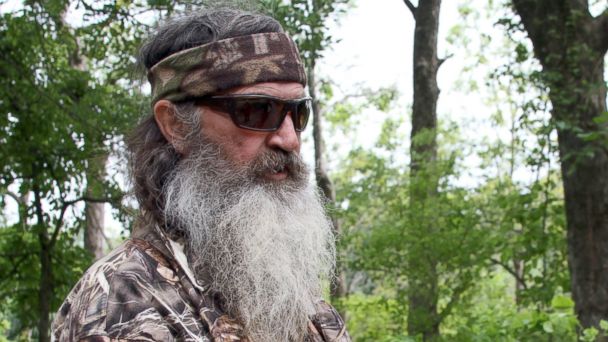
PHOTO: This photo taken May 15, 2013 shows Phil Robertson posing for a photograph at his home in western Ouachita Parish, La.By now, I'm sure you've heard of the Phil Robertson (of Duck Dynasty fame) flap regarding his sentiments about gay people. If you're gay, you've likely heard it from Left-leaning media. If you're Christian, you've probably heard it from Right-leaning media, from Christian friends, or - coming to a Sunday near you - from the pulpit. If you're a gay Christian like me, you've probably been "lucky" enough to hear it from all over the place.**

Regardless where you've gotten the news, it seems to be almost impossible to resist making a comment about the whole debacle. Try as I might to live above the fray, I found myself dragged into the debate as well, and here I am making a whole post about it!

Except, I don't think the issue is all that important in and of itself. Is what he said offensive to gay people (and Black people too for that matter, which is getting surprisingly less press coverage)? Sure. Any more offensive than what is stated by millions of Americans every day? Not really. Is it worth debating? Sure. But should he lose his job for it (i.e., should A&E kick him and his show to the curb)? That's the key question for me. No, I don't mean "does A&E have the right to fire him?" That's silly. Of course they do! They're a private enterprise, and have the right to make whatever hiring and firing decisions they please with their employees. (That's actually a very conservative principle, so I'm a bit baffled why so many conservatives are so put-off by his suspension. But I digress...)

What I'm really getting at here, though, are the implications for this type of continued behavior. Martin Bashir makes offensive statements about Sarah Palin. Conservative pundits (including Palin herself) are shocked and appalled. They call for MSNBC to take action. Bashir leaves the network (leaving most of us to speculate that he probably didn't have much choice in the matter). But the examples are plenteous.  A Rightie says something stupid, the Lefties call for them to be punished in some nebulous way. A Leftie says something stupid, the Righties cry "Crucify him!" And back and forth it goes.

I would like to suggest something here. Could we perhaps call a truce? Can we end the Culture Wars? Because it has all devolved into a national gang/mafia mentality: You shoot my guy, so me and my boys go kill all of yours. And on and on it goes. Nobody wins. Everyone loses.

Many conservative Christians are starting to see the writing on the wall here. Cases like Phil Robertson's make them zealous. They wonder aloud "if this is what happens when someone stands for Biblical truth, it's just a matter of time before they'll throw us in jail just for being Christian!" They are angry, they are indignant, they are afraid, and so far it seems the overwhelming response is to dig their heels in further and take up the Culture War battle cry.

In all honesty, I think they're largely correct. The cultural tide has changed dramatically on gay issues, and saying anything that remotely equates homosexuality with sin is labeled bigotry, hateful, and homophobic. We can debate all day and night about whether that's fair or not, or about the merits and morality of gay love. But that's just more of the same. What I think is far more important to highlight with conservative Christians is this:

What exactly did you expect would happen when you proudly entered the Culture War, army in tow? In a case of mass narcissism, this entire tide change is interpreted as being "just what Jesus said would happen: we'll be reviled and rejected for His sake." Martyrdom syndrome.

I would like to offer an alternative hypothesis: perhaps you are now the victims of your own war-obsessed lifestyle. I think the more appropriate Scripture to describe the phenomenon is Matthew 26:52: "...for all who draw the sword will die by the sword."

Not long ago, those with minority religious views were oppressed and marginalized. It's part of the reason this nation was founded. Protecting religion is, for better or worse, part of the marrow of these United States. But there's this strange thing that happens when oppressed groups come to power: they have a proclivity to become oppressors.

To wit: Where were you, O Christian, when your gay classmates were bullied in school? Did you use the Word of God to chastise the perpetrators? Where were you, O Christian, when Matthew Shepard was brutally murdered in large part because of his sexuality? Did you hold press conferences to denounce this sort of hatred? Where were you, O Christian, when it became abundantly clear that the Anoka-Hennepin school district in Minnesota was a hotbed of gay teen suicides? Did you protest the school district until they did something about this injustice? Where were you, O Christian, when Jamey Rodemeyer committed suicide? Did you convene a Million Christian March for the lives of the thousands of young, helpless, tortured souls just like his?

Perhaps you were there and supportive, but only a minority of you were (outside the Progressive wing of Christendom anyway). Because my Facebook News Feed hasn't blown up with your support during any such similar events. But when Robertson opens his mouth and lets all sorts of jackassery fall out, you are quite vocal indeed. Do you really think the message the Church is passing along to gay people is truly one of love?

The problem here is that for too long, Christians have been on the same side as the general culture which proscribed homosexuality. As society oppressed LGBT individuals, Christians were more than happy to oblige, in many instances leading the charge. But now an increasing number of people are beginning to grant LGBT people the dignity that they deserve. And in no small part, this is actually the fault of Christians themselves. People young and old began to consider the hypocrisy concerning "God's people of love" and their treatment of LGBT people.  You are complicit in the disillusionment of the masses.

But now the sands are shifting. Did you really expect the LGBT community to simply forget your hateful words, your blind eyes, your mute mouths, your taunts, your torture, and your condemnation? Did you think they would simply say "Oh well, that was in the past, water under the bridge, let's be friends now!" especially when so many of your leaders continue to deny them fundamental rights and protections? Is it really surprising to you the vehemence with which many in the LGBT community go after you when you publicly declare (your version of) Biblical truth? These are the wages of warmongering, my friends, and not the "reviling" for Christ's sake that you may suppose that it is. (If you want to understand being reviled for Christ's sake, try speaking a message of love and acceptance of God's gay children without qualifications or caveats to a conservative Christian audience.)

If you don't want your doomsday scenario (being tossed in jail for having a negative opinion about homosexuality) to come to fruition, maybe consider raising the Peace Flag. Not letting go of your convictions, but simply letting go of the need to go to war over them.

I do not mean to insinuate that you do this simply because you're currently losing this war. I urge you to do so because it is right. I urge you to do so because turning weapons into ploughshares was always God's vision for humanity, and you are his hands and feet here to accomplish it. You have given the LGBT community no reason whatsoever to be kind to you, to tolerate you and your views, or to see what great "love" you have for them. Christ has given you every reason to walk justly, humbly, and peacefully with all men. You have given the LGBT community no reason to quit fighting. Christ has given you every reason to recognize that "eye for an eye" is outdated, ineffective, and off the mark. Now is the time to cease fighting a community, and fight instead the principalities and powers of injustice and mean-spiritedness.

I know what you're thinking: "BUT GAY IS SIN! It's SIN, goshdarnit! What if being nice to The Gays and no longer fighting them makes them think they're not hell-bound?!"  Honestly, I think you're jumping the gun here. I have no great expectation that you're going to just spontaneously see (or be coerced into believing) that gay love is good love. You may keep your "sin" label if you please. But try building some bridges while you do it. Try really understanding and walking in the shoes of the people you are sure are sinning. Try to find ways to fight for them (simple things like taking bullying of gay teens seriously as evinced by social action, or holding vigils for gay people who commit suicide) and see how that changes the landscape of America. You might be quite surprised by the results. And if you've got a great imagination, consider what the sociopolitical atmosphere would be like right now had this been the Christian response all along.

Finally, to the LGBT community, I want to offer a reminder. I reiterate that when oppressed groups gain power, they are in danger of becoming oppressors themselves. Consider this the next time a conservative Christian minimizes your experiences and expresses his displeasure with your "lifestyle." Consider this the next time a Christian decides not to bake a cake for your gay wedding. Put yourself in their shoes. What might you feel like if everything you believed and held dear, everything that made your world feel ordered and safe, came crashing down before your eyes. You think their refusal is because they hate you? Perhaps in some cases, but not likely in most. Their refusal has more to do with their cosmology and sense of well-being than your sexuality. It just so happens that your sexuality causes a very uncomfortable wrestling with sacred words and beliefs. I understand that to you this is about civil rights and good ethics, and no one should get a free pass on civil rights. Again, I am no more suggesting that you forego your moral convictions than the conservative Christian should. I'm simply suggesting that in the process, you try to imagine the lived experience of being a faithful follower of Christ's with a particular (often literal) interpretation of Biblical living. Just walk in their shoes for a bit. How do you think this all feels? I think some tough dialogue about the contrasting world views would be far more beneficial to all than a long drawn out legal battle over some damn cake! Yes, yes, "it's the principle of the thing". I get it. I really do. But consider how your principle applied feels to others who are different from you. It may not change your conclusion, but it might compel you to modify your approach, and that can make all the difference in the world.

Above all, remember that it is the nature of power to ebb and flow. LGBT people may be gaining more social influence and respect (as I think it ought to be), but it may not always be the case. Consider how you might want your enemies to treat you should you suddenly find that all the gains are losses anew.

**Disclaimer: I recognize that much of this essay dichotomizes Christians and the LGBT community, when in fact there is overlap between the two. I also recognize that there are many, many Christians out there who are strong champions for LGBT people. Further, I recognize that I make sweeping assumptions and stereotypes throughout. Forgive me for the caricatures. It is merely a response to the polarization I've witnessed on my Facebook News Feed over the past few days because of the "Duck Dynasty Debacle." And sometimes, not qualifying every statement one makes can be beneficially provocative. I'm hoping this is one of those times...

Thursday, March 28, 2013

How Chief Justice Roberts Helped the Pro-Gay Marriage Cause in the Hollingsworth v. Perry Case

It was a simple enough question, but honestly one that I hadn't thought about (and given the fumbling response from Solicitor General Donald Verilli, one he hadn't thought about either). In fact, I don't think I've heard anyone from the pro-gay side bring this up in quite this way:
CHIEF JUSTICE ROBERTS: Can I ask you a problem about -
GENERAL VERRILLI: Sure.
CHIEF JUSTICE ROBERTS: -- I -- it seems to me that your position that you are supporting is somewhat internally inconsistent. We see the argument made that there is no problem with extending marriage to same-sex couples because children raised by same-sex couples are doing just fine and there is no evidence that they are being harmed. And the other argument is Proposition 8 harms children by not allowing same-sex couples to marriage. Which is it?
It's a really brilliant question. A crucial one.  Especially in light of the *only* near-legitimate social science study to date to to show harm for children raised by gay parents: Mark Regnerus' The New Family Structures Study. Now, I don't want to get into the myriad reasons that this Regnerus study was flawed (the good folks at Box Turtle Bulletin have done a more than adequate job of picking the study apart in several posts). But I want to venture something that very few people have been willing to say about the study: I think it's a very important study whose results need to be heeded. The reason I think it is goes back to Chief Justice Roberts' line of questioning. The study, I believe, is the smoking gun that all but proves why gay marriage ought to be the law of the land. Given that so few of the (study participant) children raised by gay parents were in stable homes of gay married people, it is obviously a bit of a "no shit, Sherlock!" conclusion that these kids faired worse than children in stable homes where the parents were heterosexual and always married.  In other words, the study compared kids in homes with stable heterosexual marriages, to kids primarily in broken homes where the parents were in some way same-sex identified at some point. That includes homes where the gay biological parent divorced their opposite sex partner and came out later in life; homes where the gay biological parent lived with a same-sex romantic partner never, for a short while, or perhaps a long while (but I don't know if any were actually gay-married); and homes where the same-sex parent stayed in their opposite sex marriage, which obviously can cause some marital stress of its own which may have a profound effect upon children.

In short, when there is no gay marriage, there is no stabilizing institution which grants gay couples the proper home and protection to raise children such that they have a chance at fairing as well as children raised by heterosexual married parents.

So I thank Chief Justice Roberts for helping to make the case that the social science to date really cries out for us to have gay marriage - even the one study largely touted by the Right as the proof that kids need a mom and a dad.  I hope that SCOTUS will make wise decisions on this case (and the DOMA case), recognizing that gay marriage ought to be Constitutional...if not for the freedom and happiness of gay couples, at least to give the kids with gay parents a fighting chance at a healthy life. I trust that they recognize the blatently obvious: gay marriage is  (as Jonathan Rauch suggests) "good for gays, good for straights, and good for America".

Monday, January 07, 2013

Vulnerability


I'm not sure exactly when it happened, or how it happened.  I just know that it happened.  There was a period in my life (the "ex-gay" days, actually) where I was profoundly aware of the need to be not only open about the goings-on of my inner world, but vulnerable about it to boot.

 Slowly, over the last 4 years, I've reverted back to the self-contained version of myself.  I think it's no good.  It's probably got something to do with this incessant pressure to be successful: successful in my career, successful in my behavior and emotional management, successful in every sense of the word as it relates to my public image.  I decided to embrace my sexuality and marry the man I love, so now I must prove to the world (but particularly my previous church friends and ex-gay companions) that I am in a perfect relationship and am fully whole. False! I'm not and I'm not.  Maybe it's also got to do with how simply excruciating it is to be vulnerable to people - even when you know it's the secret to meaningful relationships.


Regardless the reason, I've had this pestering little voice in the back of my head for some time which scolds me a little bit when I somehow manage to get off of the phone with my dearest friends from whom I've managed to extract their deep emotional struggles, but have failed to divulge in kind. I am extremely adept at it.  My good friends (P and S in particular) soemtimes manage to call me out on it.  Not forcefully, just a simple acknowledgment that they felt like I hadn't shared much, and then I promise I'll do so in our next interaction, but I rarely ever do.

I think it's time to change that. I think I just need to be a bit more honest about myself and my struggles.  For example, my last post (over 4 months ago) was a start in the right direction.  I mentioned how I have been struggling to conjure a sense of meaning and purpose in my life.  That struggle continues - perhaps more so than before.  I am riddled with self-doubt and outright deprecation sometimes: "What makes you think you could possibly get into a grad school like UMCP?", "Why can't you get to the gym a little more, fatty?", "Why can't you manage to care about anything you're doing?", and on and on the little tape player goes.  I need to tell the world about these thoughts.  I need to get them out of my own head and into the hands of friends and family I know can help me gracefully speak sense and truth to them.

In between my leisurely obsession with reading the Game of Thrones series (currently on book 3: A Storm of Swords), I've also picked up Brene Brown's Daring Greatly, a great little book that builds on her TED talk about the power of vulnerability. The TED talk is wonderful, and so far, so is the book.  I highly recommend them, though there is no small amount of pain to discovering how incredibly crappy I've become at vulnerability. Here's to growing...


Saturday, September 01, 2012

33

Yesterday marked a milestone in my life, apparently.  Yesterday, I turned 33.  This is my "Jesus Year", so named for the the estimated age of Jesus when he died. It symbolizes the transitional crossing over from young adulthood (which - from a personality developmental stance - is marked by the need to find love and companionship) into adulthood (marked by the need to make our lives generative, meaningful, and fulfilling).  It's purported to be "the happiest year of my life."

If we haven't spoken, then the words and tone of the above paragraph should give you some clue as to what has been going in my life since last I've written. (Yes, Chrissy Jo-Jo, too long! I know!) You may have gathered that I'm somewhat pessimistic about this being the best year of my life.  And thus, you've probably intuited something about my prevalent life struggles of late: I am feeling unhappy and unfulfilled, and I am searching for meaning and purpose.  You've no doubt at this point recognized that implicit in this struggle are questions and concerns about work, marriage, family, spirituality, etc.

You also may have noticed that I dropped some Psychosocial Personality Theory (a la Erikson) on you, from which you have no doubt deduced that I finally followed through on that commitment to getting myself out of pharmacy and into the psychology/counseling arena.  And you would be correct.  I have, in fact, been admitted into the MS/PhD Pastoral Counseling program at Loyola University Maryland, and did start an early course last summer in Human Development.

What you probably could not have surmised, however, is that the fine folks at Bravo (my previous employer) - despite being supportive of my desire to go part-time so that I could go back to school full-time - decided last-minute that I could not go part-time because of "company policy". Instead of crying foul and calling out "BULLSHIT!", I graciously accepted my lot in life, and (unsuccessfully) began a search for part-time work elsewhere.  Not finding any, and being completely done with this awful experience at Bravo, I chose instead to accept a job elsewhere (Xerox of all places!) where I will be helping the State with a new initiative to decrease expenditures on antipsychotic medications.  This of course sounds like a dream come true for a pharmacist: a job which perfectly weaves the breadth of my experience and training in psychiatric pharmacy practice and managed care pharmacy.  But, you have no doubt been keeping track of my struggles, so you already know that there could not be a perfect pharmacy job for me because I am completely unfulfilled as a pharmacist.  How bright you are!  So yes, you guessed correctly...this is simply a layover.

A new full-time job, of course, means that I cannot take a full-time course load.  The best I was able to manage was taking one course in Family Therapy which meets on 5 Saturdays for 8 hours per class.  Eesh! But a man's gotta do what man's gotta do...to pay the bills.

I'm not happy about it.  In fact, I'm quite displeased with being completely unhappy with my career.  Part of this, I understand, is my ongoing struggle with not being able to be content with the present.  I'm working on that though... slowly, but surely.  The whole reason I'm blogging (and hope to continue blogging more regularly) is to help ground me in the present, so that I'm not constantly fantasizing about the future, or numbing myself with HGTV so that I don't have to think about the here and now. (Yes, I am 100% addicted to all things HGTV...And what? This surprises you? I am still gay, you know...)

But the other part of this is that I do think I am genuinely stuck right now - stunted.  I'm not doing what I was made to do - I'm not being who was put here to be.  I'm not living out of passion and heart, out a sense of purpose and authenticity.  Instead, I've just been hopping from job to job to get away from the previous horrible job.

After a probing discussion with my best friend P a couple of weeks ago, he really challenged me to think about why I was not fully pursuing my dreams.  I was forced to face myself and come to the stunning conclusion that *I* am the culprit.  Not my training, not my mortgage, not Bravo...me.  Just me.  And so, I've decided that if I'm serious about being tired of my unhappiness, I need to do something drastic...

If I can't find a part-time job by this time next year, I will quit my current job and start full-time in a program that offers tuition remission and a stipend (Loyola's program requires me to pay tuition, thus the need for the part-time job so that we don't go bankrupt).  One way or another, I will be starting full-time in school by next fall.

This fall, J will be applying to several PhD programs, and I will be applying with him to schools in similar geographic areas.   So by next year, we'll either stay here in Maryland, or transplant ourselves to the Charlottesville area, the Princeton area, the Boston area, or the Ithaca area. So if you live in one of these areas, we could be neighbors :)

In case the options have gotten too confusing, here's the recap for next year.  Either I...

1.) Find a part-time job and continue the Pastoral Counseling program at Loyola. 
OR
2.) Quit my current job and start full-time in the counseling psychology program at UMCP.
OR
3.) Quit my current job, and J and I start programs (English for him, and either counseling, clinical psychology, or counseling psychology for me - depending on the program) in another locale.

So pray for me!  Or wish me luck!  Or do whatever it is that you do to send good vibes someone else's way!


Saturday, February 11, 2012

"Social Experimentation"

One of the primary fears espoused by anti-gay activists is that gay marriage is dangerous because it will lead to the downfall of Western Society.  Psychologically speaking, I think this is rooted in an innate aversion to risk-taking, change, and "icky" things. 


Conservatives should no more be judged for this than gays should be judged for falling in love with people of the same sex.  As I said, it's innate.  They can't help that they feel icky about certain things.  And it's no surprise that their political response to icky emotions leads them to  to moralize whatever puts them off.  It's ultimately about disease prevention.  I know this because I live it.  The types of studies that have shown a link between  icky-ness and political ideology strike me as true because I have a high ick factor, and despite my being gay, I am at my core a very traditional person who is wary of things that have even the slightest risk of eroding the fundamental foundations of society and culture.  You heard that correctly.  Most people who know me (or rather, who don't know me all that well) are shocked to discover how conservative I tend to be...just as they are shocked to discover that I am an *extreme* introvert. 

Some of the more articulate anti-gay conservatives have begun to show their cards and verbalize their fears about "social experimentation".  "It's too risky to start socially experimenting with an institution as foundational as marriage," they say.  And I think if they were more honest about their internalized fears, they'd restate their objections as follows: "I'm very afraid that changing our traditional ideas about marriage this way may lead to some unintended consequences, and I'm terrified about what those might be...please let's not do this!"

Putting aside the absolute fact that "the institution of marriage" has had innumerable permutations over time (Mrs. Bowers does a superb job of summarizing the Biblical ones below), I think it's odd that Christian conservatives in particular are suddenly worried about "social experimentation."  In fact, I think it's downright hypocritical, because they have been dangerously socially experimenting with us gay Christian folk for a long, long time - and they've yet to formally admit it's been an utter and egregious failure (though there are signs that "ex"-gay leaders are perhaps starting to rethink things a little).

Don't get me wrong.  I'm not here to say that a fear of social experimentation is a bad thing.  Nor am I suggesting that it's silly of Christians to have promoted ex-gay ideology and "reparative therapy." I'm just confused about why Christians continue to handle "the gay issue" so poorly by decrying social experimentation on the one hand, while conveniently forgetting about the social experimentation in which they are constantly engaging.

But let's look at why the "Ex-gay Movement" is social experimentation.  You see, when your theology dictates that the Bible is true, and your interpretation of it suggests that homosexuality is a sin, and your belief is that Jesus is the healer of all sins, then it's quite natural to assume that Jesus will heal homosexuals of their homosexuality.  So it's not unreasonable that people like myself would "deny" their gay feelings for so long, and then upon finally acknowledging them, seek to be healed by Jesus.  I'm convinced that this summarizes (perhaps crudely, clumsily, or ineloquently so) why so many of my friends voluntarily submitted themselves to the pseudo-scientific, and ultimately torturous, path of ex-gaydom - and why myriad Christian adults and youth continue to do so to this day.  But you know, the Bible never talked about becoming an ex-gay.  The Bible doesn't have much to say about being gay at all, because there was really no equivalent conceptualization of it then.  So when gay civil liberties were vaulted to the forefront of the American Conscience in the 1970's, Christians were force to respond.  That response started in the late 70's with the emergence of various ways to force oneself not to be gay.  And this, my friends, was a great Christian experiment - a social experiment - because it had never been done before.  We thought we could treat this like alcoholism, or promiscuity, or lying - in short, like any other sin. So when the leaders of Exodus - who have literally put everything they have on the line for this social experiment - start to admit that once gay, pretty much always gay for "99.9% " of people, you kind of have to believe that this isn't simply capitulation of weak people, or faithless people who only want to indulge in lots of immoral sex.

You can't not be gay. It's that simple.  And what has this little experiment of ours cost us?  Countless lives of desperate youth (yours truly was almost among that number), and immeasurable amounts of depression and anxiety that many have yet to recover from, even after years away from the ex-gay machine.

The new trend among the more advanced, conservative Christian types is celibacy (or, as those involved with the gay Christian debate are calling it, being "Side B").  It's rooted in the same sort of theology undergirding ex-gay theology, but admitting a little defeat, in that changing orientation doesn't seem to be what God cares about.  The celibacy social experiment goes something like this: God says being gay is sin, so even if you can't beat it, you still can't be it (at least not relationally).

Again, I'm not knocking the fact that Christians are engaging in these sorts of social experiments. I think conservatives are correct: allowing gay marriage is indeed a social experiment.  So I boldly admit that I engaged in the ex-gay social experiment, dabbled a bit in the Side B social experiment, and have ultimately landed in an alternative experiment (Side A): gay marriage.  And I'm not shy about the fact that all three experiments for me were grounded in my deep respect for the "Living Word", and an attempt to stay faithful to God.  I happen to believe that the Side B experiment is just as erroneous, and perhaps even as destructive (albeit in a more insidious way) than the ex-gay experiment.  Eventually, Christian thinkers who have successfully abandoned ex-gay ways of thinking are really going to have to contend with that little verse in Genesis where God says "it's not good for man to be alone."  They're going to have to stop and wonder why a God would allow people a sexuality that they could not escape, but respond to it bey decreeing that they should just learn how to be alone without an appropriate help-meet.  (Yes, I'm aware that there are many single, lonely people out there - some who never have and never will find a mate - but the issue isn't about a few unhappy people who I readily admit have had a band hand dealt to them, but rather it's about an entire class of people who are relegated to loneliness by virtue of the fact that they love who they love.)

So there you have it.  Social experimentation.  I hope that conservatives will stop using their fear of it as an excuse for opposing gay marriage, because the fact of the matter is, they're already engaging in social experimentation whenever they tell gay people what they ought to do with their lives.  For us modern-day gay folks, we've been experimenting with all sorts of different things for years.  So I hope conservatives recognize that falling in love, settling down, making a commitment, and building a life with their beloved is exactly the kind of social experiment that heterosexuals began about 2,000 years ago (i.e., monogamy).  They should be utterly proud to know that they've been so convincing in their arguments about the benefits of the best social experiment of all time, that even some of us gays are willing to try it.  Gay marriage...it's the ultimate conservative value! :)

Thursday, October 13, 2011

Why CA Should Get Prop 8 Back on the Ballot in 2012

Equality California (EQCA), arguably the most prominent and legislatively successful gay rights group in the state, is wrong about the ballot initiative on Proposition 8 in 2012.  Recently, they decided not to spearhead getting Prop 8 back on the ballot for repeal in the upcoming election, citing insufficient support.

While I understand their concern (that support for gay marriage still hovers around 50% in polls) and there is fear that we will narrowly lose once again, after having spent staggering amounts of money and energy on the effort, I still get the gut feeling that we would actually narrowly WIN this time around.  And here's why:

You see, I have long held that the reason that liberal states (such as California and Maine) vote to ban same-sex marriage is NOT because people think that marriage itself is a high priority, but because they have been cajoled into believing that their children are at risk (gasp!) if they allow gay marriage.  The folks at Box Turtle Bulletin back me up on this assumption.

Most reasonable people (regardless of their personal feelings on the subject of gay love) tend to recognize that there is no harm to them if gay people get married.  And these people will tend to skip ballot questions about gay marriage, or go in favor of liberty and freedom - even if they feel icky about the idea of gay sex.  Conservatives have latched onto this, and figured out that they need some fancy trick to encourage people to vote NO on gay marriage.  What better motivator than fear?  And what could be more scary than Teh Gays indoctrinating innocent children?!!  EEEEEEEEP!!


With adds like this, people who were once ambivalent on the issue suddenly find a good reason to read through that ballot question and vote a big HELLZ NO! 

So the fact that conservatives haven't been able to pull out enough signatures in California to put passage of SB 48 on the ballot is quite significant.  (SB 48 isthe recently passed legislation which requires schools to teach that Teh Gays have contributed - and do contribute - positively to society.)   I would surmise that this indicates we could win in a 2012 ballot on gay marriage.  California seems to no longer buy into the lame tale that Teh Gays are out for their children, and thus when voting time comes, California as a majority liberal state will get a liberal outcome on such a ballot initiative since "the Ambivalents" will simply skip the question.

Here's my advice to you gay Californians. Do everything you can to get signatures NOW!  Get Prop 8 put back on the ballots.  This time, I don't think you'll regret it...

Monday, August 01, 2011

When Do *I* Get To Be Affectionate?

Today, we're talking about PDA.  You know, those nauseatingly ridiculous public displays of affection that couples who are newly in love (and sometimes oldly in love) demonstrate for us poor innocent bystanders.

*Alert: hypocrisy forthcoming!*

Let me let you in on a little secret:  I detest PDA!  Other people's PDA, that is.  I'm that guy that screams in derision "get a room, for God's sake!" to the unsuspecting exhibitionists.  Let me let you in on another secret: I love PDA!  My own, that is.  I love walking down the street holding my husband's hand.  I love being able to give him a quick peck as we part, him off to the Apple store, me off to (the now bankrupt) Borders.  I even love other gay couples' PDA.  It's sweet.  It's adorable. It makes me smile and feel *warm fuzzies* all over.

The other day, I was on the last leg of my final flight back up to Vermont (at last, J will be coming home soon, and we will drive back home on Wednesday!)  There was a guy on the plane that for some reason annoyed me.  I didn't know why.  Have you ever just looked at someone and thought "geez, his face just irks me for some reason!"  I blamed it on sleep deprivation and general grumpiness.

Later during the flight though, it dawned on me as he incessantly leaned over to kiss his significant other: it was the PDA.  The thoughts running through my head ran something like this:

"Oh God.  What is that, the 3rd time he's leaned in for a kiss?  Now the 4th?  Jesus!  How the hell is she allowing this to happen to her?  Is she not peeved by his neediness?!  This is disgusting!"

And then it hit me.  I was jealous.  I was jealous that this young guy was able to so freely show natural affection and love to his lady, and vice versa.  But every time I do it, I have to wonder if I'll turn around to meet a fist to my face, or a bullet to my head.

Straight people have no idea how lucky they are to be able to express themselves without fear of reproach or violence.  They have no idea what it feels like to put up artificial walls with the ones they love so as to appear merely acquaintances when in fact you are lovers.

I hate that my society still forces me to pretend to be other than I am.  And I want to know...when do *I* get to be affectionate, dammit?!

Thursday, July 28, 2011

On Being Gay and Christian...and Published?

John Shore
John Shore, a career writer (currently on his own blog and for The Huffington Post), recently advertised that he was looking for LGBT Christians to "Tell Evangelicals (and the World) Your Story".  I stumbled upon it several weeks ago, and thought it was a good idea, but in the midst of the craziness of life decided I simply didn't have time for it.

But last week when I was vacationing in Vermont, I ran across another blogger (Misty at "More Musings on Christianity, Homosexuality, and the Bible") who mentioned that John was still looking for contributors for his upcoming book on the subject. So I shot him an email to ask if he was indeed still looking, and he quickly responded that he was.
Misty


Since I had already been chewing on "my story" for essay responses for my application to graduate counseling programs, I was able to fire off something substantive for John in only a couple of hours.  Today, John posted it to his popular blog: "Who Would Dare Argue This Gay Man Isn't Christian?" 

Thus far, the responses have been quite good...just waiting for the fuddy duddies to chime in.  (Let's pray they stay away though...I don't want anything ruining my mood!)

I know there are few of my faithful followers who identify as both gay and Christian (and some who - like me - are somewhat leery of identification with the latter)...I hope you share your stories as well!  The more the better, I say.  

Tuesday, July 19, 2011

Extra-ordinary

About a week ago, I was hanging out with a couple from our discipleship group (T & S).  They are the other younger couple in the group along with J and I.  We've thoroughly enjoyed getting to know them over the past year or so.  In fact, the wife (S) and I have quite a bit in common, from temperament, to anxieties, to interests in counseling.  As such, she's been great about making sure I know I feel welcome to chill with them since my hubby and I have been separated for the summer.  So I took them up on their offer Sunday before last; I grabbed up the doggy, and they brought along their reluctant toddler, and we all went for a walk on the local trail.

It was nice just to be out of my brooding shell for a bit, and to chit-chat with dear friends.  But near the end of the talk, T asked me a random question: "do you feel like you're middle-aged?"  To which I retorted: "are you trying to get beat up?!"  WTF?

Turns out, he wasn't asking if I felt as old as I looked :)  He was just relaying a scientific fact that he'd recently been pondering: as we get older, our perception of time increases, which presumably means that "middle-age" may feel a lot sooner than it numerically is.  (My guess is that he shared this because we share a deep appreciation for science and mathematics).

After my sarcastic response, I did admit that I indeed felt middle-aged.  Moreover, it's actually been somewhat difficult to deal with being a post-30 male.  As they pressed for details, I began to share with them how I had some significant dreams growing up.


When I was in elementary school, I wanted to be an actor.
But my dad told me "acting is lying, and Christians don't do that" (no joke), so I abandoned that dream.  To this day, I still sorta wish I had been a philosophy/theater double major in college.  Instead, I was a biochemistry major (Spanish minor).

During junior year, I took a Sociology class, and loved it so much, that I seriously contemplated dropping biochemistry, and being a sociology major.  Similarly, half-way through pharmacy school, I contemplated dropping out and going off to get a counseling degree.  I can't say that I regret sticking it out (there's something to be said for finishing something) and going the psychopharmacology route.  No doubt, this will serve me well in the future.  (I've recently taken the GRE, and am now all set to apply to counseling programs!)

After spilling my guts about grieving the loss of some of those dreams, I began to talk about my biggest difficulty with being 30: I feel incredibly "ORDINARY".  Intellectually, there's nothing wrong with this.  Yet, I've always felt like I would be someone great.  At first I thought I would be a famous actor, and then in college, the plan was to get a PhD in genetics and go on to earn a Nobel Prize.  And with each passing year, it's as if the proverbial bar got set lower and lower, until I was stuck in the land of ordinary.

And here I am now, nearly 32.  Let's face it: it ain't gettin' much more spectacular.  Every day that passes, more decisions get made.  The more decisions get made, the more alternative decisions become impossible.  The world is filled with fewer possibilities; our dreams get crowded out by reality.  Extra-ordinary cannot be attained.

When I finished speaking, T & S began to commiserate with me about these things.  It was astonishing!  Up until that point, I had only ever articulated these fears and frustrations with J - who is still in his late 20's, and I think perhaps cannot fully relate.  T & S have both hit the big 3-0 though, and it was refreshing to know I wasn't some solitary freak dealing with this!

At the end of that conversation, I went home and reflected on it more.  It seems as though I can sum up early life's great struggles in this way: the mid-to-late 20's seem to be about discovering who you truly are (feel free to access my old Xanga blog if you want to know more about the existential angst of that process for me!)  By extension then, it seems natural that the 30's are about coming to terms with who you're not.

And viewed from that perspective, maybe being "ordinary" isn't so bad.  After all, when you're ordinary, you're not alone...

Monday, July 11, 2011

Rising From the Ashes...

Wow.  It's hard to believe it's been over four months since my last post.  How exactly did my life get so busy?  So busy that the thought of banging out a few keys for public consumption felt like dreadful work?  Please forgive me, blogging buddies and faithful followers, for abandoning you.

I've abandoned quite a few people lately, actually.  I feel like my world has gotten very small.  So much so that when J went off to VT a few weeks ago, it took me several days to figure out who I could actually talk to or hang out with.  In my bachelor days, whenever I found myself feeling lonely and needing some company, I would always call Diem (pharmacy school days), or Christy.  Man...I had some good times with those ladies :D  I miss them terribly.

Don't get me wrong.  It's not like I don't have friends around here.  But what made Diem and Christy so special was that they both knew me so intimately, that I felt free to be my total, miserable, lonely self around them.  But it takes so much damn time to establish that kind of intimacy with another human being, and when you're married...you simply don't have that kind of time to invest in other people.

And then of course, there's the typical D.C. busy factor.  When I wasn't reverting to my natural, introverted, leave-me-alone-so-I-can-brood-in-peace self, I had to face the fact that some of the people I wanted to hang out with were at events, or with their own significant others, etc.

So I suppose it's been a rough few weeks.  And it has seriously fucked with my head.  I've had all kinds of amazing, wonderful thoughts and feelings.  But I've also entertained some horrifying, ghastly thoughts and been to the Valley of the Shadow of Death a few times.  (And NO, that is not a reference to feeling desperately suicidal!  It's just my figurative way of talking about going to that scariest part of my psyche that I usually am able to avoid by focusing on work, my husband, church, helping others, and all manner of other "distractions".)

Also, since last I wrote, I've (in some cases we've) managed to:

1.) Employ a late wedding gift given to me by a phenomenal psychologist friend: Relieve Anxiety with Medical Hypnosis... it's actually been very helpful.
2.) Start a new prescription: buspirone (for anxiety as well)
3.) Shave my head


4.) Buy a townhouse
5.) Move into said townhouse within 24 hours of settlement
6.) Drive J up to VT for the summer 48 hours after moving into said townhouse
7.) Take the GRE (Quantitative: great; Verbal: meh; Writing: TBD)
8.) Start looking into counseling programs I'm going to apply to (so far it's the MS/PhD in Pastoral Counseling at Loyola University Maryland and the PhD in Counseling Psychology at University of Maryland)

And last but not least, I've begun to emerge.  I've been making contacts with friends I haven't had a soulful conversation with in months...even years.  I kinda forgot how much I missed them.  I suppose being alone for a bit doesn't have to be the very worst thing that ever did happen to a person. Not fully anyway.  We've still got a long way to go.  At some point I'll need to address the myriad mindfucks that have recently accumulated...

Wednesday, March 02, 2011

Wellbutrin...

It's a bit of a misnomer for me, I think, because I do not feel all that well on Wellbutrin.  There is this depressing, self-deprecating voice looming in the recesses of my brain.  Perhaps this is because Rite-Aid switched up on the generic version of Wellbutrin they've been using, and it's not quite as effective.  It's doubtful though, because I feel like this has been creeping up on me since prior to picking up my last refill.  Maybe it's time to increase the dose?  Or maybe it's not the meds at all.  Maybe the meds were only able to help me escape my personal demons temporarily.  Maybe it's just time to face these imps head on.  All I know for sure is that what I hear inside me - what I feel inside me - is very, very familiar.  It's the stench of hating myself because I am convinced in some deep area of my soul that I am not enough, that I am ugly, that I will be utterly alone and destitute because something is wrong with me.  What is wrong with me, I don't know - I've never known.  But I know that something is, because right now I feel very, very alone. 

At work, I am surrounded by people, but I feel so alone.  No one really gives a shit about me here.  My voice means nothing.  I've just taken to becoming a yes man.  I do whatever I'm told without question.  God forbid I try to explain why something makes me unhappy, because I'm dismissed as being "negative" and "complaining too much."  So I don't make suggestions anymore (I am, thankfully, not the only employee who has consigned themselves to accepting the status quo - so at least I know I'm not crazy here).  I turn my lights out, close my door, and do my work.  I can't even bare to be here sometimes.  The solitariness is utterly dispiriting.

I wish I could just leave this place, and go home to a place where I can be in communion.  But even at home, I feel alone.  I can't even tell you why that is.  It seems like an ever-widening gap between me and the whole world.  I fall deeper into myself, increasingly feeling the need to erect the walls and keep unsafe humanity at bay.  And then I'm left with the myriad voices in my own head: the quiet optimist, the boisterous pessimist, the reserved speaker of good self-esteem, the obnoxious speaker of self-hatred, the "you-can-do-it!" promulgator, the "why-the-hell-bother?" projector.  And somewhere in the mix...the voice of God?  Or the devil?  Or is it all just me?  Is it all just the God of my imagination, and the devil of my creation?

I want to not be here... like this... anymore...

I can only hope that this is all for my good.  Maybe it's time to go back and visit Lance for a bit.